
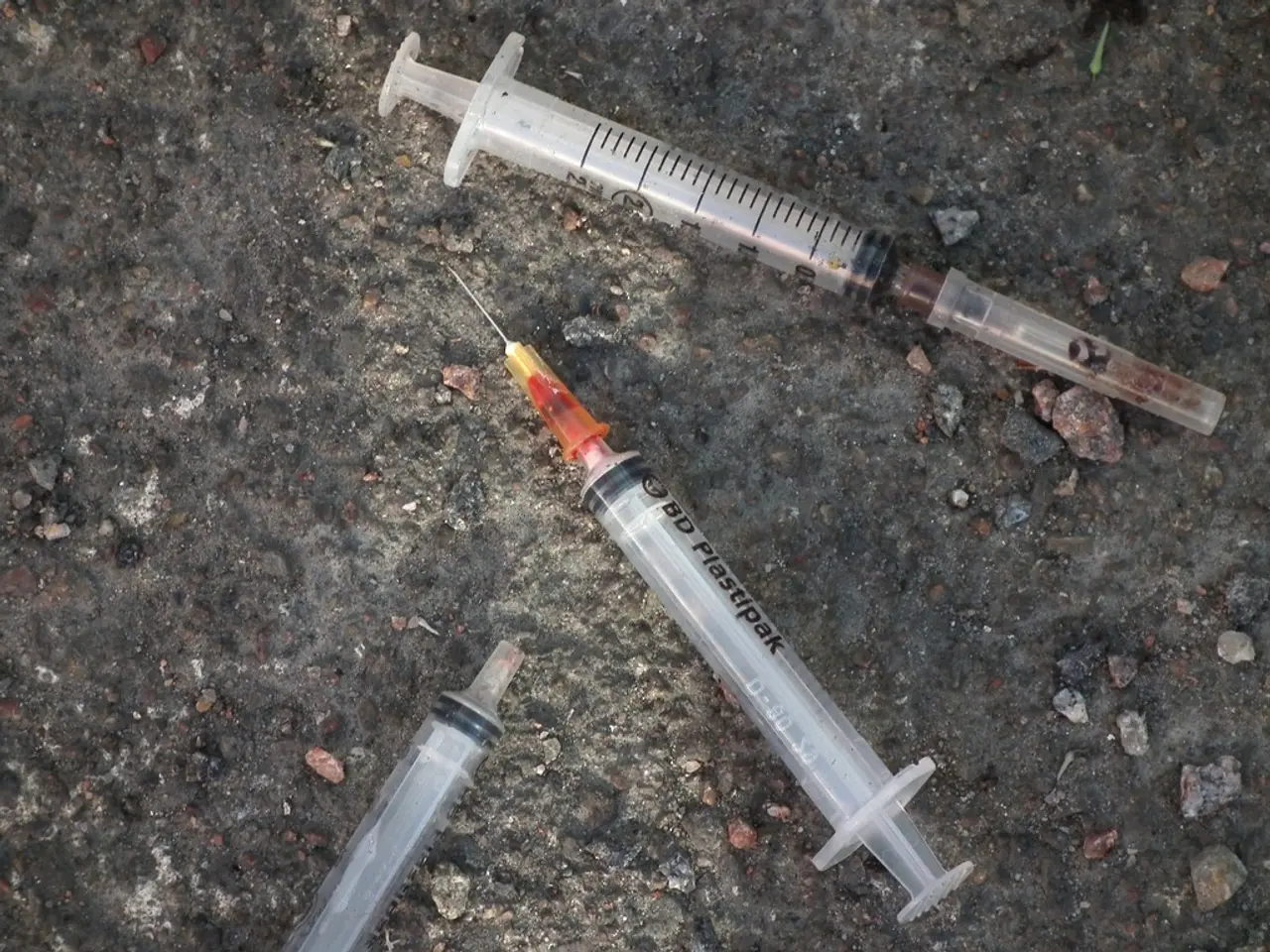
Unstable Syringe Availability: A Perspective on the Problem
In the realm of healthcare, a seemingly ordinary item like a syringe can become a critical vulnerability when supply chain disruptions occur. This reality has been underscored by the recent challenges in syringe supply, as shown by the removal of 12.5 million dialysis syringes from circulation due to contamination in November 2023 [1].
Common weaknesses in the supply chain of prefilled flush syringes and similar syringe types include heavy reliance on overseas manufacturing, exposure to contamination risks during production, and disruptions caused by global crises such as pandemics or geopolitical tensions. These vulnerabilities can lead to delays, shortages, and quality challenges that directly impact patient safety, especially since these syringes are used for critical applications like catheter maintenance and direct medication delivery into the bloodstream [2].
In response to these challenges, manufacturers like BD have taken significant steps to reshore production to the U.S. and increase automation. For instance, BD announced a $35 million investment in 2025 to expand its Columbus, Nebraska facility, aiming to produce hundreds of millions of additional prefilled flush syringe units annually [2][5]. This expansion increases domestically manufactured supply and incorporates fully automated, contamination-minimizing processes, which enhance quality and reliability.
To bolster resilience against such supply chain issues, healthcare leaders can adopt several strategies:
- Support reshoring and domestic production, reducing dependency on vulnerable international supply lines.
- Encourage investments in automation and quality controls that minimize human contact during manufacturing, thereby reducing contamination risks.
- Maintain diversified supplier bases with multiple geographically distributed facilities to avoid single points of failure.
- Engage in strategic partnerships with manufacturers who commit to expanding capacity and innovation in syringe production.
- Anticipate regulatory and trade policy changes, as policies like tariffs on imports may influence supply dynamics and costs [3].
These approaches can help ensure continuous access to critical syringe types, maintain patient safety, and mitigate the risks exposed by recent global supply chain disruptions. These strategies align with trends seen in large-scale efforts, such as BD's ongoing multi-billion-dollar investment plan to expand medical device manufacturing in the U.S. [1][2].
The past few years have seen the US grappling with a prolonged shortage of flush syringes, with incidents like the recall of 267 million prefilled saline flush syringes by Cardinal Health in August 2021 due to a plunger defect [4]. Syringe supply has become one of the most fragile links in the healthcare supply chain, with recent years witnessing a series of safety communications from the FDA concerning plastic syringes manufactured in China, citing systemic quality concerns [6]. In 2023, 32 million disposable syringes were recalled due to incompatibility with syringe pumps [3].
As the healthcare industry navigates these challenges, it is crucial to foster a resilient and innovative approach to syringe production. By doing so, we can better safeguard patient safety and ensure uninterrupted access to essential medical supplies.
References:
[1] BD Announces Multi-Billion Dollar Investment in U.S. Medical Device Manufacturing. (2021). BD (Becton, Dickinson and Company). https://www.bd.com/-/media/company/about-us/newsroom/press-releases/2021/bd-announces-multi-billion-dollar-investment-in-us-medical-device-manufacturing/index.html
[2] BD invests $35 million to expand prefilled syringe manufacturing in Nebraska. (2023). Fierce Pharma. https://www.fiercepharma.com/manufacturing/bd-invests-35-million-expand-prefilled-syringe-manufacturing-nebraska
[3] Tariffs on Syringes and Needles. (2025). U.S. International Trade Commission. https://www.usitc.gov/tariffs-syringes-and-needles
[4] Cardinal Health Recalls Certain BD Plast-I-Mold Prefilled Saline Flush Syringes Due to Plunger Defect. (2021). U.S. Food and Drug Administration. https://www.fda.gov/safety/recalls-market-withdrawals-safety-alerts/cardinal-health-recalls-certain-bd-plast-i-mold-prefilled-saline-flush-syringes-due-plunger-defect
[5] BD's Nebraska syringe plant expansion to create 130 jobs. (2023). Omaha World-Herald. https://www.omaha.com/business/local/bd-s-nebraska-syringe-plant-expansion-to-create-130-jobs/article_5969347f-819c-5c82-8c93-1ea06f764066.html
[6] FDA issues safety communication concerning plastic syringes manufactured in China. (2023). U.S. Food and Drug Administration. https://www.fda.gov/safety/recalls-market-withdrawals-safety-alerts/fda-issues-safety-communication-concerning-plastic-syringes-manufactured-china
- The removal of 12.5 million dialysis syringes due to contamination in November 2023 underscores the critical importance of maintaining quality and safety in prefilled flush syringes and similar devices.
- In health-and-wellness, syringe supply chain vulnerabilities can lead to risks such as infections and complications, emphasizing the need for reliable medical-condition management.
- To promote patient safety, guidelines and policies should be implemented to ensure the production of high-quality syringes, with a focus on minimizing contamination risks.
- The industry should adopt science-based approaches, leveraging advancements in medical-condition research to develop safer and more effective syringe designs.
- Supporting supply chain innovation through strategic partnerships and investments can help mitigate risks and promote healthcare resilience.
- By diversifying manufacturing locations, supply chains can provide continuity of care during global crises like pandemics or geopolitical tensions.
- Healthcare leaders can collaborate with manufacturers to create more robust systems for identifying and addressing contamination risks, thereby reducing the spread of infections.
- As part of overall health care, caregivers and patients should follow guidelines for safe syringe use, minimizing their own risks and contributing to a safer and more transparent health-and-wellness ecosystem.