
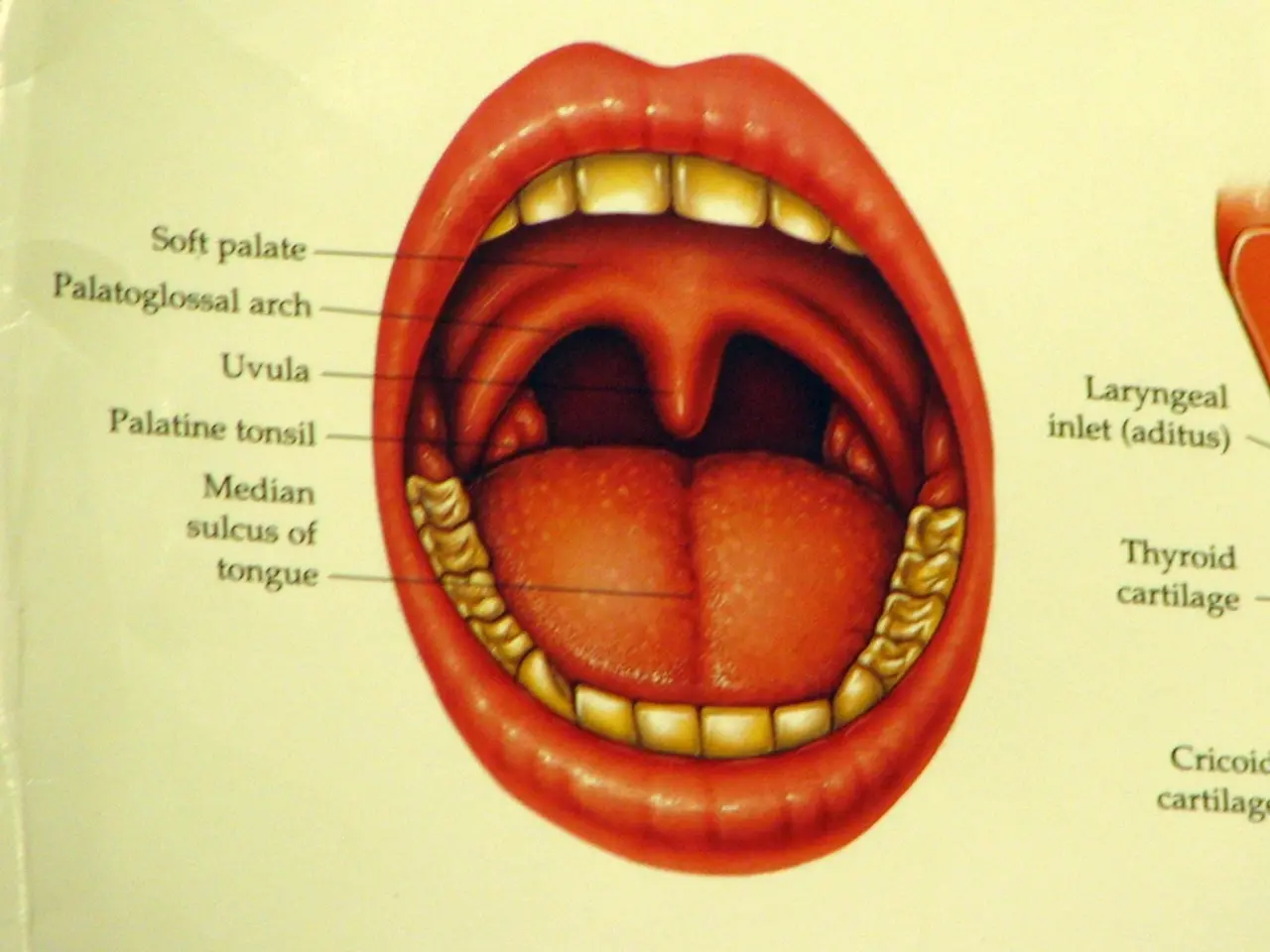
Tongue Symptoms and Origin: Investigating Acid Reflux and Visual Markers
In the realm of oral health, a white or coated tongue is a common phenomenon that might raise some concerns. However, it's essential to understand that this condition can be linked to various factors, not just Gastroesophageal Reflux Disease (GERD).
Oral thrush, a yeast infection, is one such cause, resulting in the tongue turning white or yellow with a thick residue on top. On the other hand, canker sores, small ulcers that can appear on the tongue, lips, or near the gums, are more common conditions that cause mouth sores.
A recent study found a relationship between white or coated tongue (WT) and GERD, with WT being more common and more severe in those with GERD. However, it's important to note that a white or coated tongue is not a specific or definitive diagnostic sign of GERD.
Other factors, such as poor oral hygiene, bacteria buildup, dehydration, and even conditions unrelated to GERD, can also cause a white or coated tongue. For instance, a yellow coating on the back of the tongue might indicate reflux, but this is not conclusive evidence of GERD.
Symptoms of GERD typically include regurgitation, sour or bitter taste, lump in the throat, burping, and difficulty swallowing. A persistent sore throat, burning in the throat or mouth, and bad breath could also be signs of frequent or severe acid reflux, or GERD.
Burning mouth syndrome (BMS), which causes a burning sensation in the mouth, sometimes along with dry mouth, should also be considered.
In case of persistent changes to the surface of the tongue, it is crucial to consult a doctor or dentist promptly. They can rule out serious conditions, make a diagnosis, and recommend treatments. It's also worth noting that some health experts consider tongue changes to be a method for diagnosing diseases elsewhere in the body, such as GERD, based on traditional Chinese medicine principles.
Managing GERD with medications or lifestyle changes can help reduce symptoms, making the tongue appear more normal. Additionally, treating dry mouth, which may help neutralize stomach acid, could potentially reduce acid reflux.
In conclusion, while a white or coated tongue might be a clue to the presence of reflux-related irritation, it should not be used as a sole diagnostic tool for GERD. A thorough clinical evaluation by a healthcare professional is necessary for an accurate diagnosis.
- Ankylosing spondylitis, a type of arthritis, can sometimes lead to changes in the mouth, causing tongue problems.
- Tongue problems can also be linked to cancer, particularly Non-Small Cell Lung Cancer (NSCLC), as smoking is a risk factor for both conditions.
- Poor diet and low nutrition, often associated with obesity, can escalate acid reflux, leading to tongue problems and other COPD symptoms.
- People with depression, a mental health condition, may experience decreased salivation and dry mouth, potentially causing tongue problems.
- Psoriatic arthritis, a chronic inflammatory condition, can contribute to mouth ulcers, alongside nondigestive ulcers and colitis.
- Lung health is important as respiratory conditions like asthma and COPD can lead to heartburn, increasing the risk of mouth ulcers.
- Ulcerative colitis, a type of inflammatory bowel disease, can cause eye-health issues and sleep problems, which may indirectly affect the health of the tongue.
- Diabetes, a chronic disease, can lead to an increased risk of GERD, reflux, and mouth ulcers due to changes in the body's ability to regulate acid production.
- AQ (air quality) can play a role in respiratory conditions like asthma, which may contribute to tongue problems through reflux and irritation.
- Science has been investigating the predictive relationship between various medical conditions, such as diabetes, obesity, and chronic diseases like cancer, in the context of sleep and workplace wellness.
- Maintaining health and wellness involves regular fitness and exercise to strengthen the body, reducing the risk of chronic diseases like cancer and improving overall mouth health.
- Mental health, including stress and anxiety, can aggravate GERD symptoms, contributing to mouth problems and other chronic diseases.
- Skin-care routines can indirectly impact oral health, as some skin conditions, such as psoriasis, can lead to mouth ulcers and other tongue problems.
- Therapies and treatments for chronic diseases, such as chemotherapy, can affect the digestive system, potentially leading to tongue problems like reflux and mouth sores.
- Weight management is crucial for maintaining a healthy weight, reducing the risk of obesity, and improving oral health.
- Controlling acid-related conditions, like GERD and peptic ulcers, might require diet modifications that promote weight loss and improve health and wellness.
- COPD, a respiratory condition caused by smoking, can aggravate acid reflux, leading to mouth ulcers and other problems like depression and obesity.
- In the realm of health and wellness, it's important to consider the interconnectedness of various conditions, such as diabetes and GERD, and their impact on oral health.
- Collaborative efforts between medical professionals, patients, and workplaces are key to promoting workplace-wellness, considering the prevalence of chronic diseases and their connections to tongue problems and overall oral health.