
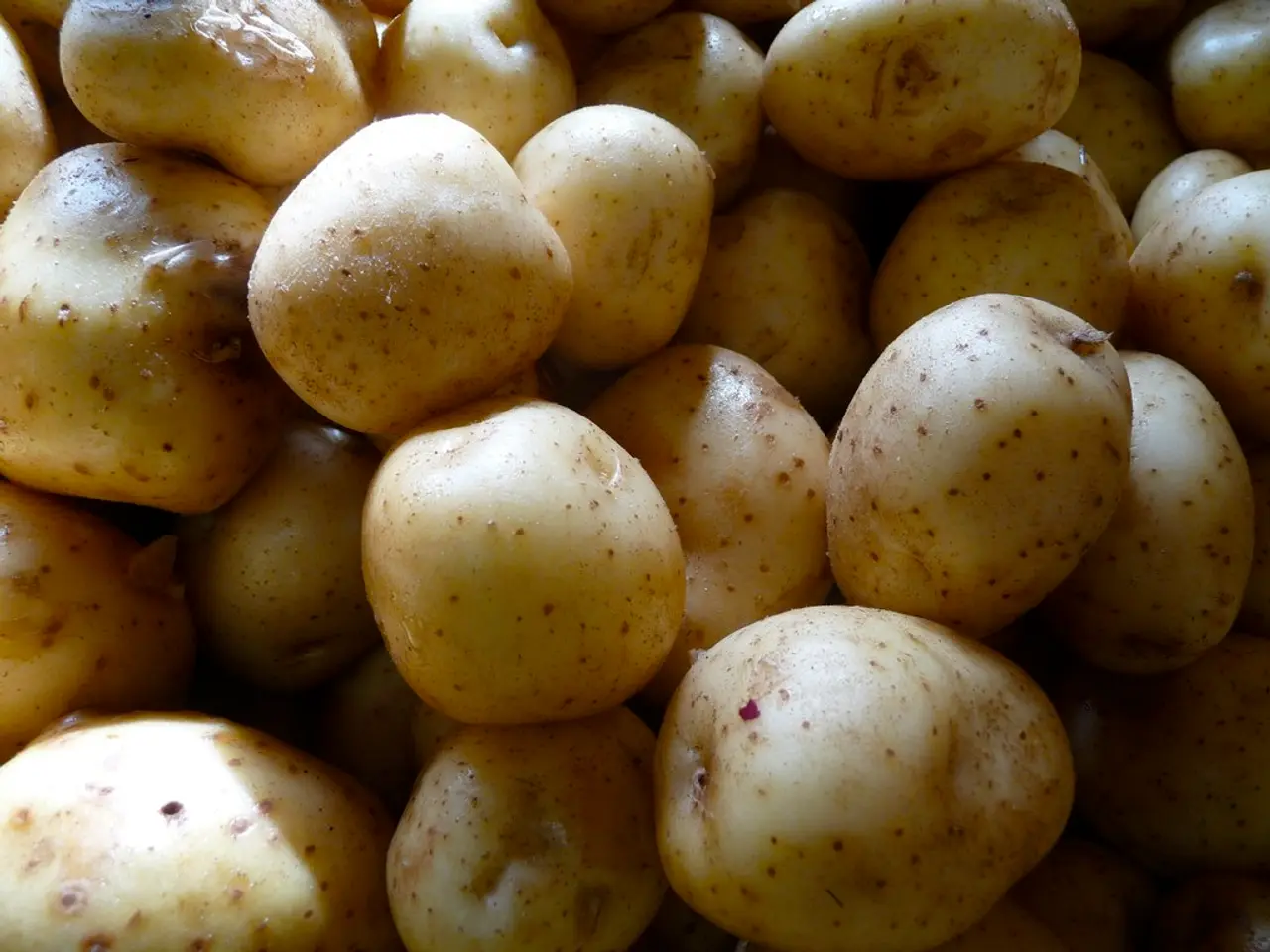
The Gravitas of Potato Disease Cannot Be Overlooked
In the world of agriculture, a fungal disease known as late blight, caused by *Phytophthora infestans*, continues to pose significant problems for the cultivation of potatoes and tomatoes on a global scale. This disease, which has been a persistent issue for many years, is becoming increasingly difficult to control due to the development of fungicide resistance and the presence of multiple pathogen strains.
Experts at the Agricultural Center Augustenberg in Karlsruhe, Germany, have observed resistances to late blight for several years, making fungicides less effective. The control of late blight, therefore, relies heavily on timely and integrated management practices. Early detection, the use of resistant cultivars, strict cultural controls such as destroying infected plants and volunteer nightshade hosts, and the application of effective fungicides like chlorothalonil and mancozeb are crucial to delay disease progression and reduce inoculum sources.
Fungicides like Ridomil (metalaxyl) have shown rapid suppressive effects on sensitive strains, but once the disease is established (more than 0.5% diseased foliage), suppression becomes difficult, and disease can still increase gradually despite treatment. This indicates that fungicide control is more effective when applied preventatively or early, and less so once the pathogen and inoculum are widespread.
The presence of multiple and resistant strains, as well as favourable environmental conditions (cool, wet weather with high humidity), shorten the window of effective control. The pathogen can spread rapidly through rain and wind, leading to outbreaks within days to weeks, making control a continuous and dynamic effort.
Ongoing community monitoring and rapid response are essential because untreated infected plants in local gardens or fields serve as reservoirs for inoculum, undermining control efforts on a larger scale.
In Germany, the Ministry of Agriculture in Baden-Württemberg has warned about the massive threat of both Stolbur, a disease transmitted by a cicada, and late blight to potato cultivation. Different strains of late blight are causing problems across the country, and LTZ agricultural engineer Bernhard Bundschuh has warned about the difficulty in controlling late blight.
The problem of late blight should not be underestimated, especially for the staple food, the potato. If left unchecked, potatoes can rot in the ground, and tomatoes can become inedible due to the disease. Isolated resistances to late blight are a concern for LTZ agricultural engineer Bernhard Bundschuh, and no specific timeline for the continued effectiveness of current means to combat late blight was provided by experts.
In conclusion, control measures remain effective only as long as they are timely, integrated, and responsive to local disease pressure. Without strict cultural practices, resistant varieties, and early fungicide use, late blight control may only be temporarily effective, typically measured in seasons rather than years, especially under conducive weather conditions with multiple strains present.
- Despite advancements in the field of agriculture, the control of late blight, a fungal disease that affects potatoes and tomatoes, remains a challenge, especially due to the development of fungicide resistance and the emergence of multiple medical-conditions (strains) of the pathogen.
- In the realm of health-and-wellness, early detection and timely integration of preventative measures, such as the use of resistant cultivars, cultural controls, and effective fungicides, are crucial in managing late blight and delaying disease progression.