
Sustainable Horticultural Methods in Permaculture: An Approach to Thoughtful Planting
In the heart of bustling cities, a green revolution is taking root. Mindful gardening and permaculture are transforming urban landscapes, offering a sustainable solution to food production while fostering a deeper connection with nature.
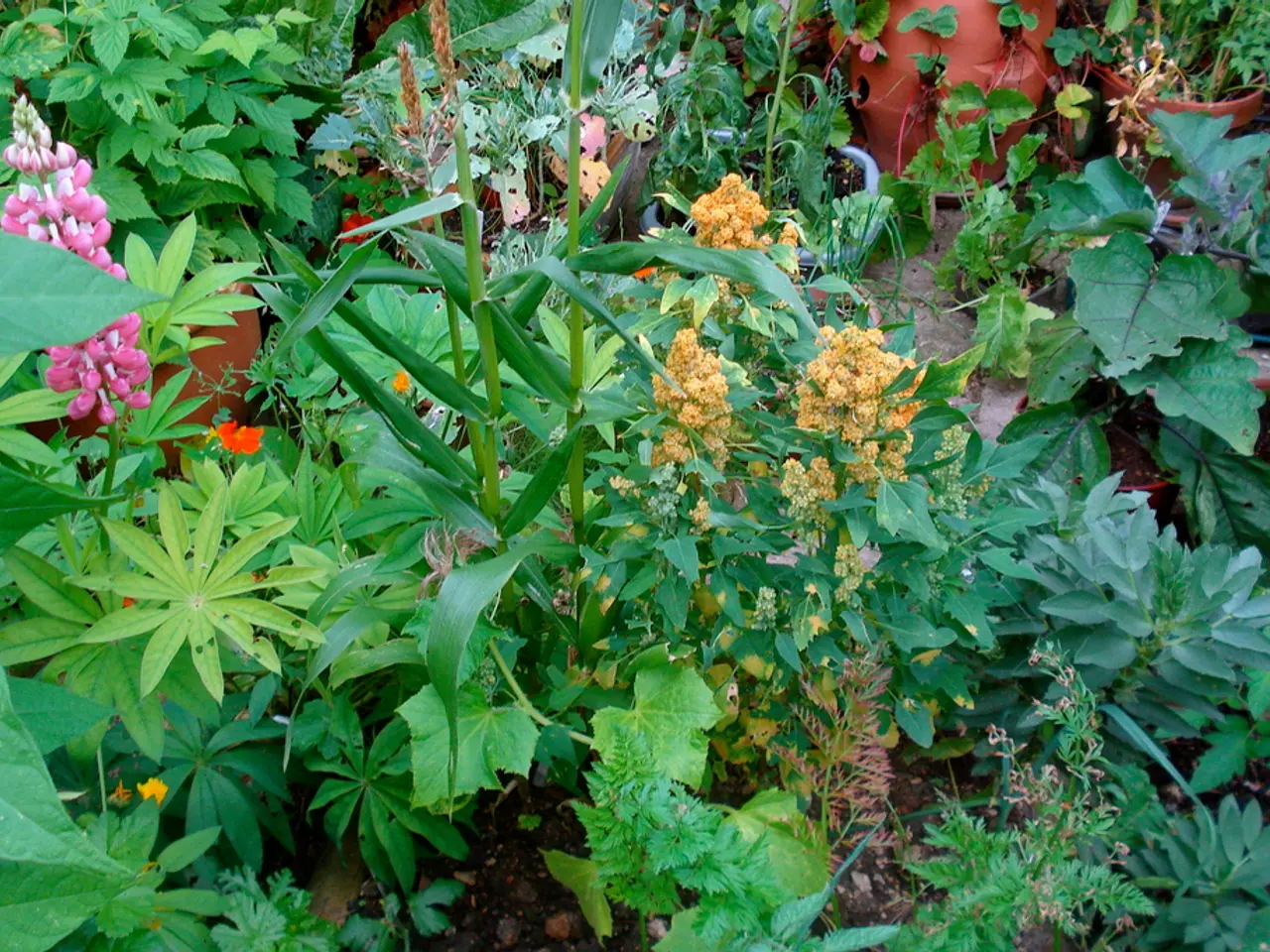
Growing your own food in an urban setting can be more than just a hobby; it's a way to feel connected to nature, improve your health, and contribute to the planet. By adopting a permaculture approach, you can establish strong, fruitful ecosystems that thrive in limited spaces, such as containers or vertical gardens.
The process begins with a thorough site analysis, focusing on sun exposure and local ecology. A water strategy is designed first, with an emphasis on capturing and conserving water. Garden zones are then mapped based on plant needs and usage intensity, and beds and access paths are laid out for easy maintenance. Guild planting, which combines mutually beneficial species, enhances biodiversity and plant health.
Food forestry, a new way of growing food, blends nature with productive gardens. It's more than just gardening; it's a lifestyle that connects us to the earth and each other. Gardening can provide a sense of purpose and belonging, fostering a strong sense of community.
Mindfulness plays a crucial role in observation, deepening our understanding of garden ecosystems. Slower, more intentional movement reduces stress and increases our connection to the garden. Seasonal pattern recognition improves holistic gardening strategies, allowing us to work in harmony with nature.
However, challenges persist. Limited land access, resource allocation difficulties, community disruption from gentrification, and zoning restrictions impact ecological practices. Yet, mindful gardeners recognise the delicate relationship between plants and pollinators and strive to create thriving garden environments by observing and supporting these creatures.
Composting is another essential aspect of mindful gardening. It enriches soil with essential nutrients, reduces waste sent to landfills, and supports carbon sequestration. Composting requires patience, close watching, and regular turning to break down effectively and avoid unpleasant odours.
Pollinators, such as bees, butterflies, wasps, and other insects, play a critical role in maintaining biodiversity and food production. By creating a pollinator-friendly environment, we can support these essential creatures and contribute to the health and productivity of our gardens.
Building vibrant community gardens requires inclusive planning processes, shared decision-making frameworks, clear communication channels, and flexible participation models. Learning from mistakes, seeking constructive feedback, and embracing personal growth are key to the success of these projects.
In summary, mindful gardening and permaculture offer a holistic approach to urban food production, fostering a deeper connection with nature while promoting sustainable practices. By embracing this lifestyle, we can create vibrant, productive gardens that nourish our bodies and our souls.
- In urban landscapes, the garden zones are mapped based on plant needs and usage intensity, adhering to the permaculture approach that thrives in limited spaces.
- Water management is a priority in these sustainable gardens, with designs aimed at harnessing and conserving rainwater for use in the garden.
- The design principles include swales, which are shallow, broad, curved channels used for conveying stormwater runoff, and no-till gardens to minimize soil disturbance and reduce evaporation.
- To optimize soil health and plant growth, native plants are encouraged as they require less water, promote biodiversity, and can better withstand local climate conditions.
- By incorporating companion planting, gardeners aim to maximize intercropping benefits, creating a synergy between species and promoting their health.
- The process of mindful gardening incorporates science, not just philosophy, to improve health-and-wellness, fitness-and-exercise, and mental-health.
- The transition towards regenerative, organic gardening promotes the use of compost and natural fertilizers, enriching soil, and encouraging nutrient-dense crops.
- These community gardens foster a sense of belonging and contribute to biodiversity by providing food sources for pollinators such as bees and butterflies.
- The collective effort and shared responsibility of community gardens also facilitates learning and growth, creating opportunities for personal development and connection with others.
- This practice of mindful gardening not only nourishes the body but also feeds the soul, offering a valuable demonstration of ecological principles in the realm of health-and-wellness and mental-health.