
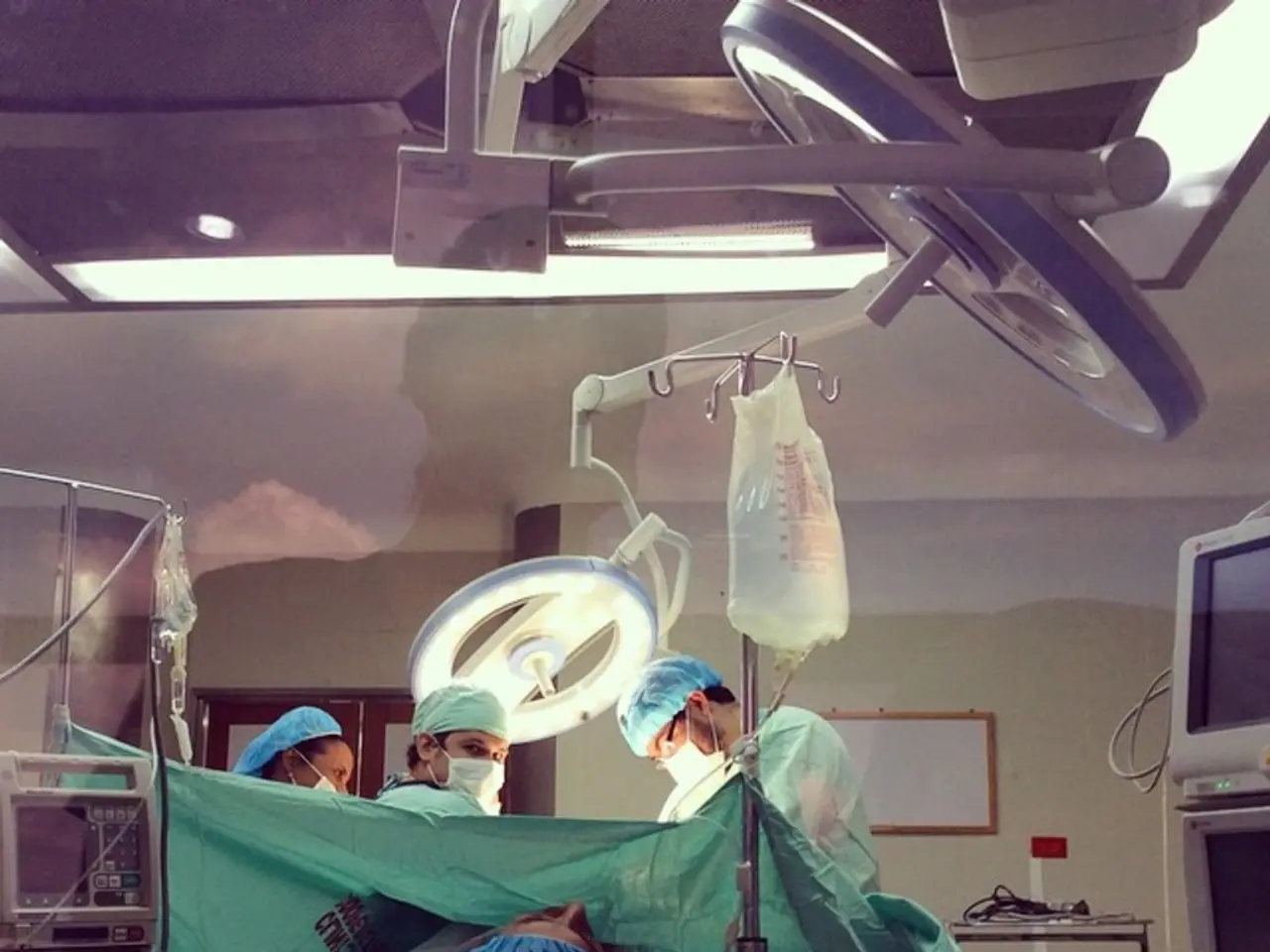
Machine conducts initial autonomous task
**Revolutionary AI-Controlled Robot Performs First Autonomous Surgery**
In a groundbreaking development, an AI-controlled robot named SRT-H has successfully performed an autonomous operation, marking a significant milestone in the field of surgical robotics. The historic surgery, which involved removing a pig's gallbladder, was conducted at Johns Hopkins University in Maryland, US.
The robot, SRT-H, is based on the same AI as ChatGPT and was trained using hours of video footage of human surgeries. It is currently capable of working with the expertise of experienced surgeons during trials, learning to act independently during the operation, and adapting in real-time to individual anatomical conditions. The robot can also handle unexpected situations typical of real medical emergencies and responds to spoken commands, making it interactive.
This evolution of AI-controlled robotic surgery has its roots in early mechanically guided robotic systems, such as the PUMA 560, which evolved into computer-assisted surgery with the introduction of the da Vinci Surgical System. However, SRT-H is not a widely recognized term in the surgical robotics literature, likely due to a typographical error or confusion with specific robotic systems.
Recent years have seen the integration of artificial intelligence (AI) algorithms into robotic platforms, enabling features such as real-time feedback, intraoperative video analysis, and adaptive neuro-visual systems. These advancements have led to improved surgical precision, reduced operative times, and a decrease in intraoperative complications compared to manual methods.
The future of AI-controlled robotic surgery is promising, with plans to increase the autonomy of surgical robots, moving from current AI systems that provide decision support towards greater situational awareness and autonomous task execution. This is expected to reduce surgeon fatigue and cognitive load, while improving safety and efficiency.
Innovations such as miniaturized robotic arms, flexible instrumentation, and modular multi-arm systems are being developed to improve access to narrow, curved anatomical spaces. The integration of AI and robotics is also expected to extend further into fields like dentistry and rehabilitation, offering scalable, less-invasive care options.
However, continued innovation will require addressing regulatory hurdles, standardizing surgical protocols, and validating efficacy through large-scale clinical trials. Reducing capital and maintenance costs will be essential for broader adoption.
In the longer term, the evolution of AI promises even greater integration of intelligent robotics into surgery, with the potential for quasi-autonomous or autonomous surgical agents. The study on the robot surgery, published in the journal "Science Robotics," demonstrates that AI models can be reliable for surgical autonomy, paving the way for a future where AI-controlled robots like SRT-H could become commonplace in operating rooms worldwide.
- The development of SRT-H, an AI-controlled robot capable of autonomous surgery, highlights the increasing role of artificial intelligence in the field of health-and-wellness and medicine, particularly in the environment of surgical procedures.
- As the AI-controlled robot SRT-H learns from human surgeries and adapts to individual anatomical conditions, it underscores the potential for technology to revolutionize the environment of healthcare service delivery and surgical precision.
- The integration of AI-controlled robots in healthcare, such as SRT-H, could lead to a significant shift in the community policy regarding medical-conditions treatment, potentially increasing the autonomy of surgical robots and improving health-and-wellness outcomes in the future.