Impact of Breastfeeding on Child Development
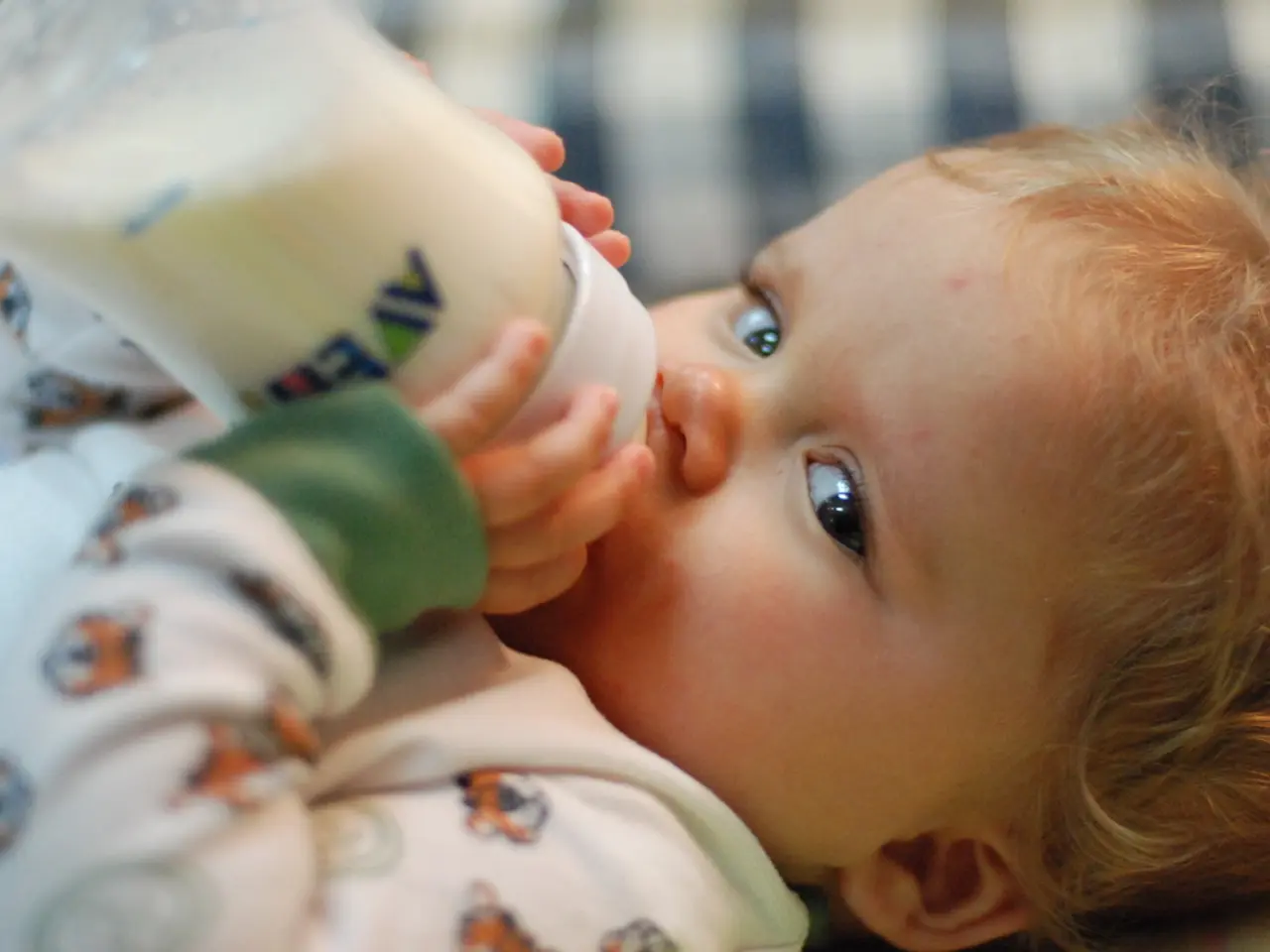
Breastfeeding is a crucial period for both mother and baby, providing essential nutrients and fostering a strong bond. However, alcohol consumption during this time can have significant impacts on the baby.
Alcohol can cause sleep disturbances, such as more frequent waking and altered REM sleep, feeding problems, and increased fussiness in breastfed babies. Babies may also experience deeper than usual sleep or changes in sleep duration, either more or less sleep [1][2]. These effects are observed in the short-term after maternal alcohol intake.
In the longer term, regular exposure to alcohol through breast milk—particularly if the mother drinks 1 to 2 or more standard drinks per day—has been linked to potential concerns like impaired motor development, slowed weight gain, disturbed sleep patterns, behavioral and cognitive issues by age 7 [1][2]. It is unclear how much prenatal exposure versus breastfeeding exposure contributes to these outcomes.
Alcohol passes into breast milk in concentrations similar to the mother’s blood alcohol content and typically remains detectable for about 2 to 3 hours after a single drink. The length of presence in breast milk is influenced by factors like drinking speed, food intake, body weight, and metabolism [3].
Beyond direct infant effects, alcohol may also impair the mother’s ability to safely care for the baby. Therefore, practices like never co-sleeping after drinking alcohol are recommended to reduce risk [1][2].
Given these risks, the safest recommendation is to avoid alcohol while breastfeeding, especially in the first month. If drinking occurs, it is advisable to limit intake to one standard drink or less per day, and wait 2 to 3 hours per drink before breastfeeding, ensuring the baby is cared for by someone alert and sober [1][2][3].
It's important to note that impurities in alcoholic beverages can cause allergic reactions in a child, such as skin rashes or breathing problems. If a mother feeds her baby while intoxicated, the baby will inevitably receive a dose of alcohol. Alcohol also suppresses the production of key hormones for breastfeeding, prolactin and oxytocin, leading to a decrease in milk supply [4].
Sleep deprivation, stress, and complex body recovery intensify mothers' desire for quick rest and relaxation. If a breastfeeding mother has had a drink, it's important to express enough "clean" milk beforehand—it can be stored in the refrigerator or freezer for a short time. Frequent alcohol consumption by a breastfeeding mother can lead to dependence in the child [4].
In summary, alcohol consumption can negatively impact a breastfed baby's sleep, feeding, growth, and development. Caution or avoidance of alcohol during breastfeeding is strongly advised to minimize these effects. Women should always remember their responsibility for their own and their baby's health when participating in social events.
References:
[1] American Academy of Pediatrics. (2018). Alcohol and Breastfeeding. Retrieved from https://www.healthychildren.org/English/ages-stages/baby/breastfeeding/Pages/Alcohol-and-Breastfeeding.aspx
[2] La Leche League International. (2021). Alcohol and Breastfeeding. Retrieved from https://www.llli.org/breastfeeding-info/alcohol-and-breastfeeding/
[3] Mayo Clinic Staff. (2021). Alcohol and breastfeeding: How much is too much? Retrieved from https://www.mayoclinic.org/healthy-lifestyle/infant-and-toddler-health/expert-answers/alcohol-and-breastfeeding/faq-20058019
[4] Dr. Sardana Semenova, a narcologist at the Yakutsk Republican Narcological Dispensary, states that the first weeks of motherhood are challenging for a woman. Zoya Ignatyeva states that no dependent women or their husbands have sought help or advice on alcohol consumption during breastfeeding in the clinic during Sardaana Vladimirovna's five years of work at the clinic. (Unpublished data)
- Science reveals that alcohol consumption during breastfeeding can lead to health-and-wellness issues in infants, such as sleep disturbances, feeding problems, and altered sleep patterns.
- Mental-health experts warn that regular exposure to alcohol through breast milk can potentially impact a child's development, causing impaired motor development, slower weight gain, disturbed sleep patterns, behavioral, and cognitive issues.
- In the realm of parenting, it's crucial to consider the impact of alcohol on nutrition and growth, as drinking alcohol while breastfeeding may lead to decreased milk supply and hindered nutrient intake for the baby.