
Gorillas in Gabon Discovered Consuming Vegetation with Antibiotic Properties Against Drug-Resistant Bacteria
Gorillas' Tree Bark Diet Could Hold the Key to Fighting Drug-Resistant Infections
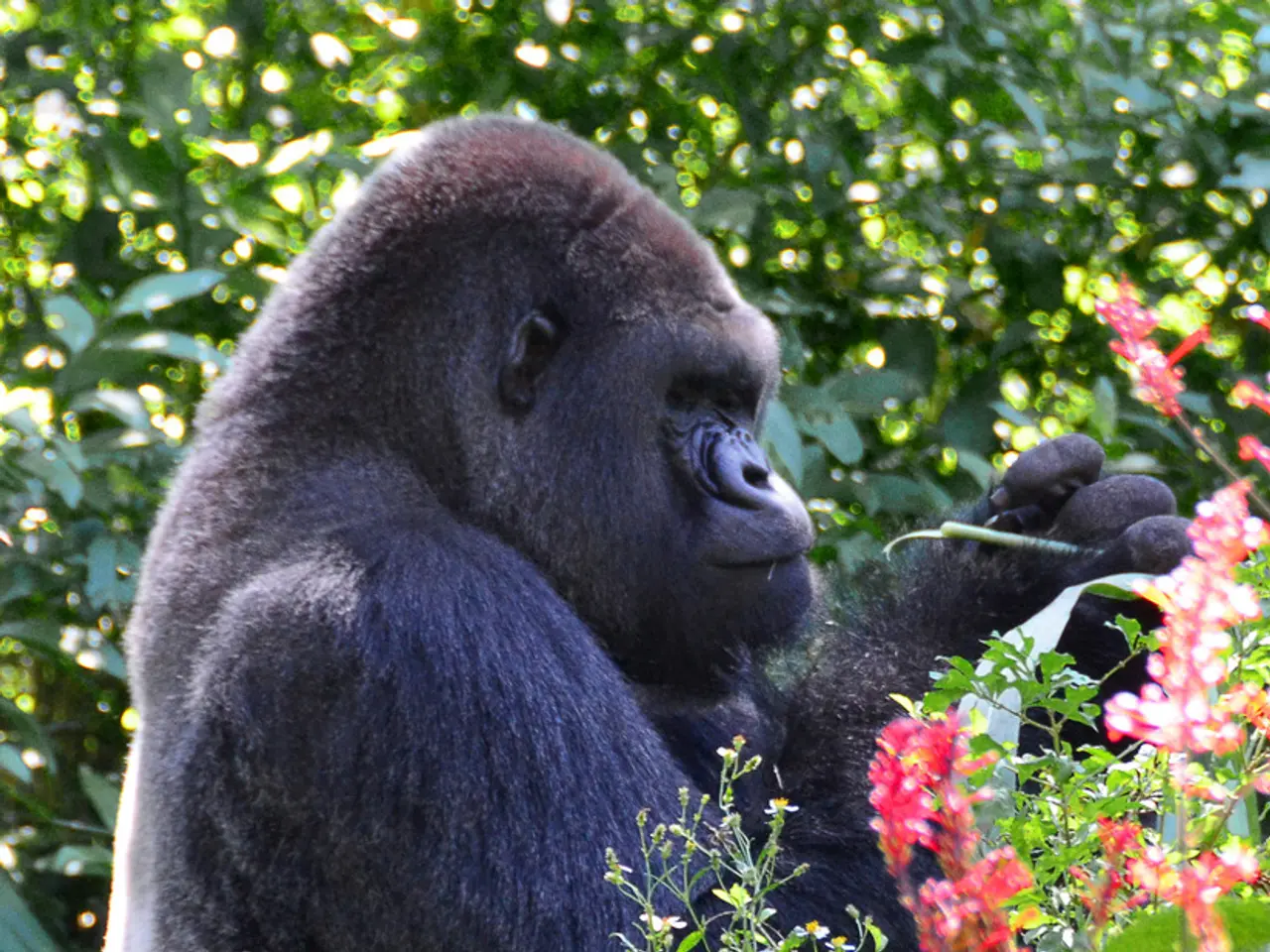
In the heart of Gabon, where gorillas roam freely, a fascinating discovery is unfolding. Researchers have found that these great apes are not just eating trees for sustenance, but also for their medicinal properties.
Gorillas in Gabon consume bark from various tree species, including the fromager tree (Ceiba pentandra), giant yellow mulberry (Myrianthus arboreus), African teak (Milicia excelsa), and the fig tree (Ficus). The bark of these trees contains natural compounds like phenols, alkaloids, flavonoids, and proanthocyanidins, which have anti-inflammatory, antiviral, and anesthetic properties.
This discovery could potentially unlock new treatments for humans against antibiotic-resistant bacteria. Wild gorillas in Gabon have been observed self-medicating with certain plants that have medicinal properties, a behaviour also seen in other great apes such as chimpanzees and orangutans.
Chimpanzees consume leaves that aid in clearing parasites from their guts, while gorillas seem to be onto something that modern medicine hasn't yet fully explored. The plants consumed by gorillas have antibacterial abilities, particularly against drug-resistant strains of E. coli.
The bark extracts from the trees, especially from the fromager tree, were effective at inhibiting bacterial growth, including all 10 strains of drug-resistant E. coli. This finding suggests that the gorillas' diet could be a goldmine for discovering new antimicrobial agents.
However, it's important to note that while gorillas consume tree bark likely containing antibacterial compounds, there are no specific investigations reported linking these properties to potential treatments for drug-resistant infections in humans. More studies are needed to confirm the safety and effectiveness of these plant compounds for humans.
Paying attention to the behaviors of animals around us can lead to discovering new ways to treat diseases and heal ourselves. As primatologist Jessica Lodwick warns, destroying these trees could result in the destruction of nature's pharmacy. This research bridges ancient wisdom with modern science, as local healers have been using these plants for centuries.
The urgent need to tackle drug-resistant infections in humans, caused by bacteria that no longer respond to conventional treatments, has led to the recognition of using traditional or wildlife-exposed plants as sources for new antibiotics. Detailed chemical and pharmacological studies would be needed to isolate, identify, and validate any antibacterial compounds from the specific tree bark species eaten by Gabon gorillas.
In summary, the antibacterial properties of tree bark species consumed by gorillas in Gabon represent a valuable starting point for developing new antimicrobial agents. Further targeted research in this area could uncover novel leads to address antimicrobial resistance.
- The discovery of gorillas consuming trees in Gabon for medicinal properties, particularly the bark of fromager trees, giant yellow mulberries, African teaks, and fig trees, could support research in environmental science to develop new antibiotics for fighting drug-resistant infections, a crucial element in health-and-wellness and medical-conditions.
- This novel approach in studying the ecosystems of Gabon's gorillas, by analyzing the medicinal properties of the plants they consume, could potentially revolutionize the field of science by drawing parallels between ancient wisdom and contemporary research, empowering the fight against antibiotic-resistant bacteria.
- As the environment plays a significant role in the well-being of humans and their health, it is crucial to preserve the ecosystems of regions like Gabon, given that their plants could hold the key to future treatments in environmental science, health-and-wellness, and medical-conditions.