
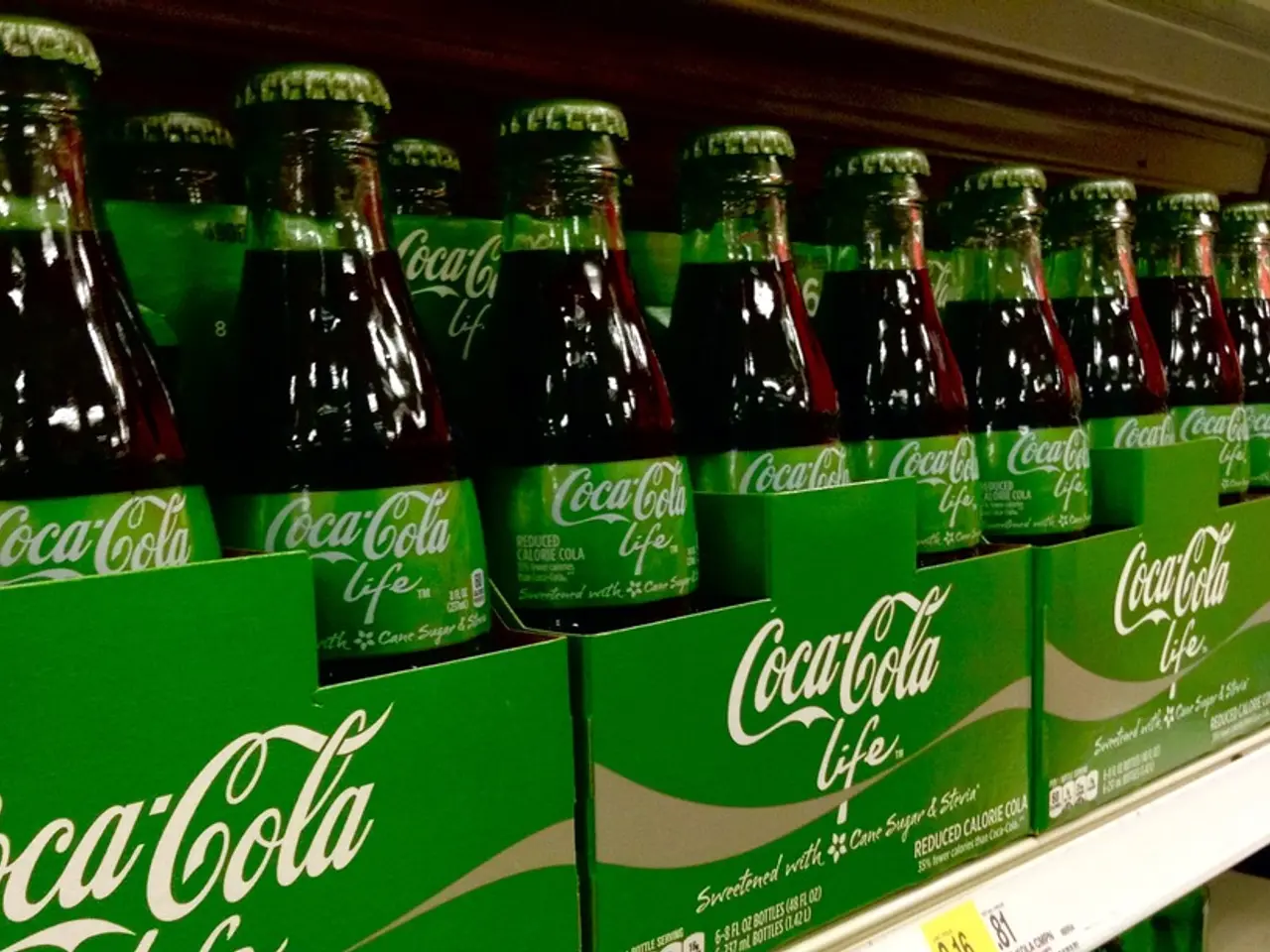
Completely altered in taste.
In the realm of consumer preferences, companies are continually striving to cater to health-conscious consumers. However, the effects of these alternatives on gut flora are now being questioned [1]. This conversation is timely, as the cola brand Pepsi is set to launch a new prebiotic cola variant, "Pepsi Prebiotic Cola," in early 2026 [2].
The Pepsi Prebiotic Cola will boast a significantly reduced sugar content, with only five grams per serving, and no artificial sweeteners, making it a more enticing option for those seeking a healthier beverage [2]. The recipe change comes in response to the growing trend towards greater health awareness, a shift that is not unique to Germany.
Soft drinks, including cola, are non-alcoholic beverages based on water, flavors, sugar, minerals, and carbonic acid [3]. In Germany, the consumption of these beverages is substantial, with an average of 125 liters per capita annually [4]. This equates to approximately 8.7 billion liters nationwide, making Germany the third-largest consumer in Europe [1].
Despite the popularity of soft drinks, the health implications are a cause for concern. High consumption of sugary soft drinks is linked to increased risks of obesity, diabetes, and other metabolic diseases due to their high sugar content [5]. This aligns with broader European and global findings [5][6].
However, the market for alternative products is expanding. In Germany, the market for powdered soft drinks is growing moderately at a 3.5% CAGR, driven by health and sustainability concerns [6]. The growth rate of soft drink consumption in Germany is relatively modest, with an average annual increase of only about 0.2% between 2013 and 2024 [1].
The new Pepsi Prebiotic Cola will not only offer a lower sugar content but will also contain up to three grams of prebiotics, which promote gut health [2]. This move towards healthier options reflects a broader shift in consumer behavior, as consumers become more mindful of their health and the potential impact of their dietary choices.
It remains to be seen how the taste of the new Pepsi Prebiotic Cola will be received, but one thing is certain: the soft drink landscape is evolving, and consumers are increasingly seeking healthier alternatives.
References:
- Statista (2021). Soft drink consumption in Germany from 2013 to 2024. Retrieved from https://www.statista.com/statistics/268343/annual-soft-drink-consumption-in-germany/
- PepsiCo (2021). PepsiCo to launch Pepsi Prebiotic Cola in early 2026. Retrieved from https://www.pepsico.com/news/pepsi-prebiotic-cola
- European Food Information Council (2021). Soft drinks. Retrieved from https://www.eufic.org/en/knowledge-library/article/soft-drinks
- Statista (2021). Per capita consumption of soft drinks in Germany from 2013 to 2024. Retrieved from https://www.statista.com/statistics/268344/per-capita-consumption-of-soft-drinks-in-germany/
- World Health Organization (2021). Consumption of sugary drinks and weight gain. Retrieved from https://www.who.int/news-room/fact-sheets/detail/consumption-of-sugary-drinks-and-weight-gain
- Euromonitor International (2021). Powdered soft drinks market in Germany. Retrieved from https://www.euromonitor.com/powdered-soft-drinks-market-in-germany/report
- The growing trend towards greater health awareness among consumers is causing companies to respond, such as Pepsi's introduction of a prebiotic cola, "Pepsi Prebiotic Cola," with a lower sugar content and prebiotics to promote gut health.
- In the health-and-wellness sector, nutrition plays a significant role as consumers become more mindful of their dietary choices, leading to a rise in the demand for healthier alternatives, exemplified by the expanding market for powdered soft drinks in Germany.
- The evolution of the food-and-drink industry is marked by consumer preferences shifting towards a more science-backed lifestyle, with an emphasis on healthy diets that minimize risks of metabolic diseases such as obesity and diabetes.